
A Collector’s Guide to Antique and Vintage Wicker Furniture

Wicker furniture has a certain genuinity to it, which is able to enclose workmanship, memories, and purpose in a leisurely manner. These are delicately made woven furniture from straw, or rattan, or willow and can also be both beautiful and functional. Owning a piece of wicker furniture is more than just a functional element; it is an object that is a part of movable design history and one that can be associated with changing fashions and tastes of previous centuries. This guide explains why antique and vintage wicker furniture is sought after, ways of telling if a piece is genuine and also precautions on how to handle the items. This piece is for the seasoned and the novice collector as it will enhance your knowledge on how to appreciate these and other similar objects and also your ability to put money where your mouth is.
Understanding Wicker Furniture
What is Wicker Furniture?
Before we begin can I ask you a question, what do you understand by the term woven furniture? This is the technique of composing pieces of furniture using the art of weaving that inspired the name and principles of “Wicker work”. It is the process of weaving natural materials, such as rattan vines, bamboos, willows or even synthetic plastic fibres, to form very stable but also attractive shapes of furniture. Wicker is usually understood to mean the manufacture of furniture in a weaved fashion, rather than any actual substance used. However, it should be noted that customary wicker furniture will be fabricated with natural materials derived from plants which are known for their high pliability and strength.
Wicker furniture history can be traced many centuries back and has been used in very ancient cultures, and Egypt, the Romans, as well as the Chinese, are among such cultures. The lighweight and yet strong design helped that it became popular for everyday use and easy in transportation, while the exquisite work of art made the object an age long status symbol of beauty and sophistication. As a result, wicker furniture has been widely accepted to date, and the appreciation of it reached its zenith in the nineteenth century, more precisely during the Old Victorian period, due to the magnificent designs possible as well the fact that it could be used both inside and outside houses.
In the present day, the popularity of wicker furniture has reached high levels due to its elegance and the fact that it fits into any interior. Thanks to the use of both organic and synthetic materials in modern wicker furniture, the material tends to be more durable in outdoor weather. Making the real wicker furniture requires some skill, and this helps the customers regard it as a home accessory that is not only useful but also consists of many artistic elements.
Materials Used in Wicker Construction
There are different types of materials used in wicker-making, and each is for its own unique reason, such as its strength, flexibility, or even attractiveness. Common vintage wicker furniture is made out of natural materials such as rattan, willow, and bamboo. They prefer rattan because it is light and strong, especially when intricate designs are required, as it can be curved and bent easily. Similarly, willow is very bendy and is commonly used in making delicate items. Bamboo, however, is much more stiffer making it useful for designing sturdy.
Wicker weaving has been modernly enhanced by the use of artificial materials such as resin and polyethylene. Such materials are designed to resist water and ultraviolet light, which in turn extend their life spans when exposed to the harsh outdoor environment. The advantage of synthetic wicker, also known as all-weather wicker, is that it reproduces an authentic look without the need for constant care while also extending the life span.
In order to ensure that the frames of the wicker furniture are stable and resistant to any form of damage, there is usually the presence of metal or wooden frames below the layers of woven frame. Many people prefer using aluminum as a preferred choice of a frame since it does not easily corrode and it is also quite light especially where outdoor furniture is used. Real wood frames convey an older, vintage wicker furniture style, but they use may be special coatings and treatments to endure the elements. Such kinds of materials combined make furniture very functional furniture that can be quite aesthetically pleasing, and can be used in almost any environment.
The Craftsmanship Behind Vintage Wicker
The skills applied to vintage wicker furniture making seem to be an interesting blend of both artistic creation and practical construction. Different types of natural fibers such as rattan, reed, and willow, are designed by the craftswoman in order to make them into certain shapes and sizes. Boiling or soaking the plant materials ─ thesoftware even uses the idle ─ enables this, as such treatments render firm materials soft. Once soft, weaving commences involving the application of certain techniques necessitating the use of accurate and soft touch with the aim of forming beautiful but durable designs. Durability and attractiveness the article does not measure because of its size, more rightly the readiness of a finished piece depends on the weaving.
In order to improve the durability of vintage wicker furniture from the outside, professionals usually apply a coat as the final stage of their work. This may include coating the weave with natural oils, waxes, lacquer, among other materials to protect the fibers against water, and insects among other elements. Moreover, the framework that supports the wicker furniture is also enhanced with selected components to prevent disturbance in the system. Farmes that are made out of either metal or hardwood are most likely used for construction since the shape of the furniture will still be very strong and at the same time be able to last longer.
Decorative and functional creation of wicker furniture comes from a detailed view of how such pieces are made, which in most cases includes ages old manual techniques of assembling. Village skilled workers understood and over the ages could put together items of furniture which are of functionality, but have also historical and cultural worth. Such craftsmanship ensures that the pieces of vintage wicker are quite valuable because of the attractive nature of the product and its quality. Trying to restore or conserve the items can also require employing such mechanisms, which there are great craftsmen of particular types of vintage wicker furniture.
Identifying Vintage Wicker Furniture
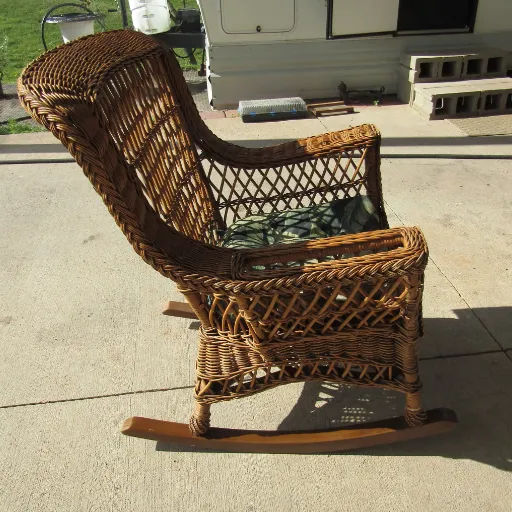
Key Features to Identify Vintage Wicker
Knowing how to identify authentic vintage wicker furniture is essential to any collector who wants to avoid disappointments that may arise from only collecting re-edition furniture. There are elements that define the vintage wicker design, for instance the sophisticated woven patterns which are a testament to the craftsmanship which had been obtained in those good old days. In other words, the vintage wicker is more likely to have tighter weaves and uniform patterns than the modern designs which are built mechanically more often for faster more precise construction. Also, unlike the modern designs, natural rattan, reeds, or willows serve as the material for the fabrication of vintage wicker with characteristics underlining their durability and texture. This is very different to what has been described during the production of modern furniture, synthetic fibres, for example, which unlike the handmade items have no naturally derived irregularities.
An important factor which confirms the vintage wicker furniture is its age. With time, natural wicker is known to develop a patina that mutes the color of the wicker and makes it look aged. This patina is usually accompanied with minor wears out in some parts of the piece that are often used for example the arm rests or the edges of the seat and many other things as in this case. Also, most original vintage pieces are framed by the wooden or metallic structures that depict various aspects of age such as rust in relation to metallic bodies and fading color of wood among other things, which makes the furniture look more vintage.
Finally, in some cases, especially for vintage wicker furniture, one is able to determine its authenticity and age through manufacturing labels or marks that may have been placed before. Many prominent names in the early twentieth century, among them the Heywood-Wakefield Company, were known for placing either a date of manufacture or an origin tag on their wicker furniture. These tags may be looked up in historical references, catalogs, or even collector’s resources and help in provenance assessment of the furniture. Enthusiasts and collectors alike – through a comprehensive assessment, which utilizes both the external and structural properties described above – are able to recognize and provenance authentic vintage wicker furniture pieces with ease.
Common Eras of Vintage Wicker
It is possible to identify a series of distinctive eras based on the production of vintage wicker furniture and its тенденции in terms of the design and production approaches. Ornateigneur designs and efficient woven skills made the oppolence of wicker furniture even more in demand from the general public around the Victorian epoch (c. 1860-1920). Wicker furniture was characterised by very prominent designs, and floral designs were especially common in this era since it was a very decorative age of manufacture.
Wicker furniture during the Arts and crafts (c. 1880-1910) was the opposite, featuring simpler and more functional forms. This design did not include the profuse use of decoration, but was defined by elegant and unadulterated shapes and finishes. Wicker furniture evolved further in the 1920s and 1930s during the Art Deco period which featured the use of bolder geometrical patterns and forms and also with the use of materials such as metallic frames for their strength.
Furniture made from Wicker during the Mid-Century Modern Era (in the 1940’s-1960’s) again became fashionable, however this time primarily due to the minimalist design and practicality of the pieces. Particularly, companies such as Heywood-Wakefield became impactful in this approach by making materials which were structured more smoothly and reconstructing color range towards more pastel and simple patterns of décor. In the course of these years, the variety of materials used for weaving together with the technology applied in producing such furniture, took their modernization further in terms of cracking the beauty and flexibility of the vintage wicker furniture.
Being completely aware of these periods may let collectors and researchers to not only place an object in the time scale but also in the dynamics of the furniture design development and the ideologies enclosed in it.
Unusual Styles and Trends in Vintage Wicker
There have been periods in history, when some strange styles and fashion trends in vintage interior objects emerged, which are part of both these cultures and technologies of specific eras. One of these was evident in the Art Novo era when the symmetrical designs gave way to the love of the asymmetrical curve. These designs did promote and encourage not the symmetrical patterns usual to the furniture design but the organic curves and shapes of the plants and flowers.
Another interesting stage took place and it was the periodic age to minimalism of the space age style the fifties. Wicker furniture is basically a vintage wicker furniture, which was introduced in modernist-cum-extravagant designs. As a result, unexpected chair styles in forms of eggs, and throttes style sits were introduced, as well as other unexpected geometric designs, which were unique deviations from the elaborate woven designs of earlier ages.
Moreover, some areas modified the wicker designs to suit the local demands for use or appearance that resulted in distinctive types. In regard to tropical regions, for example, intricate and colorful designs were often achieved using different dyes and patterns of weaves that tried to preserve the traditions of the region as well as provided seashells or colored glass ornaments in the construction. The usefulness of these objects, however, was undermined by the transformation of these objects into artistic pieces of craft work.
Researching of atypical wicker designs assists in understanding the development of wicker furniture that transcends its traditional purpose where art meets creativity. The story of chair teaching covers the transition of patterns which were all historical and cultural in origin explaining the use of wicker chairs as art in the house for decoration purposes and vintage wicker furniture.
Popular Styles of Vintage Wicker
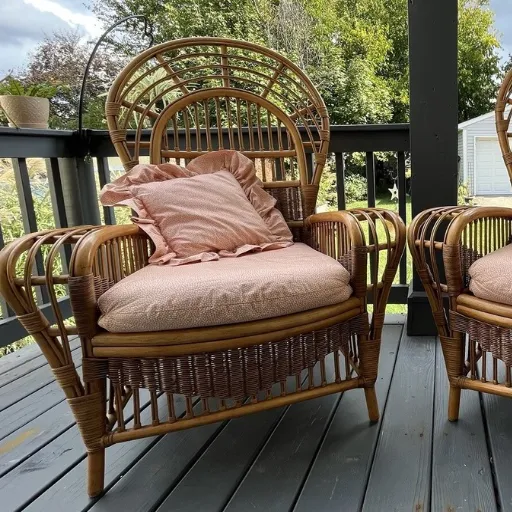
Classic Wicker Chairs and Rockers
Vintage household items have an inherent elegance that contemporary ones lack and classic wicker chairs and rockers complete this definition. Naturally derived from vines like rattan, reed, or willow, these chairs are most appealing due to the malleable qualities that these vines have. The artistic craftsmanship of different regions can also be seen in the basket weaving of the chairs, some with simple close-woven and even weaves, others more ornamental and decorated.
During the early half of the 20th century, there was a vast market for wicker chairs and rockers which came to the fore especially in the early and late Victorian and Edwardian eras due to their light weight and fitting for indoors and outdoors. Nurseries and porches in the aim of incorporation of rocking chairs, since they also give comfort, as well as being aesthetically appealing, their durability and beauty allow for the use of such a material in its timeless form.
Natural durability is a coveted characteristic of wicker because it renders it adaptable to a range of environmental conditions. Furthermore, although the material is porous, it is appreciated during high temperatures because provides comfort. Majority of the furniture was structurally sound and firmly planted on the ground without compromising on beauty. These days, they are sought after by people who appreciate not merely the material from which they were made but also the stories told and the history embedded in their patterns.
Elegant Wicker Stools and Tables
Antique wicker stools or tables can be considered to be functional design worked into art that can be traced centuries back. These are basically frames made out of some light strong natural fibers like rattan, willow or reed in most cases. Through craft with dexterous design and building practices, such stools and tables have proven effective as stylish ornaments and functional furniture. Every single stool or table is designed in such a way as to counterbalance beauty function. This is a testament to the longevity of the use of vintage wicker furniture stools and tables.
Wicker stools and tables benefit from these physical characteristics from an engineering perspective. The mesh pattern and reasonable distribution of load enable the structure to be rigid enough for everyday utilization. Also, the material’s pliability, which enhances comfort and flexibility of the chair, is another advantage for the people as it can be easily used even in the indoor and outdoor areas. However, these techniques have gone a step further and considerably increased the life span of wicker furniture due to availability of moisture, sun and abrasion resistant coatings. Several developments such as these enable these pieces to last longer thereby accentuating their utility in modern aged furniture designs.
At present, the market of wicker stools and tables ranges from a simple rustic and bohemian piece to a modern sleek version. Good standards of production and manufacturing have resulted in protecting the traditional manufacture whilst simultaneously including aesthetic features of modern design such as metal or glass details. As a consequence not only are these pieces functional but also promote a certain decorative harmony through furnishing a given area. The mixture of old artistry and modern sophistication gurantees that many wicker stools and tables will always remain indispensable much loved by interior decor specialists and canvas hand collectors respectively.
Porch Furniture: The Vintage Wicker Trend
Wicker furniture is still a great option for the porch, as it is strong in a conventional way that makes it versatile and suitable to any décor. Usually, wicker material consists of natural raw materials like rattan, bamboo, or resin within its structure. However, it is very resistant to the elements especially with the application of appropriate protective treatments. This makes the longevity in more extreme environments considerable if not astounding.
When it comes to decorating, it is worth noting that remarkable progress in material finish and UV stabilization has made styling of all colors and even most conventional or new homes possible. Furthermore, because it is made of high-impact molded plastic and hollow inside, wicker furniture is so easy to move around and adopt new positions according to the prevailing conditions such as change of seasons or change in design of the porch on the events. Market researchers believe the above is due to the consumers’ growing favor towards resin wicker which would be based mainly on the fact that it is affordable and does not require much care, while still providing the aesthetics of even the most common natural materials.
In the quest of achieving both functionality and aesthetics, especially among home owners or decorators who will wish to have vintage wicker furniture, there is no better solution than those eternal classics, wicker porch furniture.
Caring for Vintage Wicker Furniture
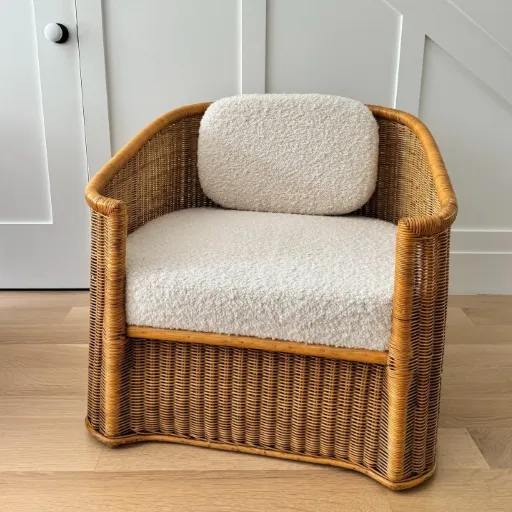
Maintenance Tips for Longevity
If you care for your vintage wicker furniture, they will serve you for a long while. Do not forget that you should adhere to the best practices when managing different materials. The first step is to frequently clean the furniture with a soft-bristled brush or a brush fitted with a vacuum cleaner attachment to remove dust build-up prevention of which helps deterioration. To clean the furniture more thoroughly, rub it with a wet piece of cloth soaked in a small amount of soap but do not let the soap water soak in the fibers because the concentration of moisture results in the brown paper weakening. Not only leave the furniture to dry in the open air, but also do so in such a way that it will not be directly painted by the sun’s rays as the furniture will arch and fade.
Inorder to preserve vintage wicker in better condition, it will be wise to top up with another layer of thinner wax or lacquer to police wear and tear from environment i.e either changing humidity or even Ultra violet radiation. Maintaining rooms at a humidity of 40% – 60% helps to avoid drying or loosening of the fibers of wicker. For protection of furniture during weather changes or lengthy storage, utilization of waterproof breathable furniture protection covers is recommended.
Ensure that weaving and joints are inspected from time to time for signs such as even wear and tear on any woven elements. Open fibers or joints are weaknesses in the framework that require quick attention with the necessary glue work and/or a pro wicker reconstruction expert to keep all services and appearance in order. In keeping with these length considerations, maintenance of vintage wicker furniture results into a very functional but also a visually pleasing furniture for years ahead.
Restoration Techniques for Wicker Pieces
The first concern with vintage furniture restoration is to get things clean, ruthlessly, and without excessive scraping. The soiled weave can be scrubbed with a soft bristled brush or a hand-held vacuum cleaner with a brush on the end in order to prevent damaging the intricate mesh. In order to achieve a more extensive level of cleansing, a dilute solution of a warm water soaking agent can be wiped over the surface; nevertheless, do not saturate the wicker too much as excessive wetting may cause deterioration of the work piece.
After that, examine the wicker in terms of structural stability, with special attention to the space of loose or damaged weaves. Work should be completed by replacing damaged areas with appropriate wicker sized and styled to maintain the original dimension. There is no need to worry about fitting these new fibers into the prevailing structure as it can be done easily and then ‘stuck’ with the wood glue later on – any potential problems with strength and stability are introduced only at high loading levels which are not within the scope of our attention. Please do not rush the curing process of the adhesive because all other channels of work would be unavailable at that time.
In certain cases where the wicker has lost its original color, painting or staining would be the best option to bring it back to its former beauty. Before putting any paint on its surface, use fine-grit sandpaper to scour the surface ripping it gently to make it smooth and layer-free in preparation for painting. Coat the piece with only paint or stain that is safe for use on wicker or other natural fibers, applying it in a sprayer or with paint brushes to cover the object. Make sure the area is well ventilated during the procedure and after treatment, wait for the furnishings to dry thoroughly to suppress any likelihood of water molecules being trapped in the structure.
Lastly, in order to successfully protect the repaired surface against the elements including – moisture, as well as U. V rays, it is also possible to apply for instance a clear finish, lacquer or polyurethane. It is essential that the regular care described in the previous parts of the section is carried out in addition to the restoration to prolong its life. These elaborate procedures can be employed by chair owners in the process of restoration of their classic vintage wicker furniture while preserving the direct function and beauty of the furniture.
Dealing with Wear and Tear
In the case of vintage wicker furniture, make sure that there is no damage such as thread breaking or breaking any of the joints. Thread breaking of course is a sign that the forces perceiving the joint extends close to permissible scope. When this happens, other pieces suspended off the frame will start to splay too as minor fatigues will begin to develop. Using a fine-grain sand sheet, sand the minor protrusions smooth. This will, however, reduce the extension of sustained wear on this region. However, where significant breakages are observed, then individual strands should be replaced. As for synthetic materials, repair kits are available for plastic or wooden furniture while repairs of natural fibers can be comfortably carried out using materials like rattan or the same color cane materials.
It is, therefore, imperative that correct environmental causes of damage to its surfaces are adopted so as not to cause any further damage. Constant contact with water can also enhance its fibers surfacing such that mold can appear on the other hand the places where wicker furniture are kept should be quite dry and airy at all times. Nonetheless, the color of the fabric will easily fade or crack when exposed to the sun for too long. Alternatively, this construction can be confounded by the use of products containing UV radiation protection recommended for peat or wicker furnitures thus increasing the life of these pieces.
Proper care includes regular checks and maintenance of the items. Wiping or dusting with soft clothes or even low suction vacuuming of the wicker prevents accumulated dirt from becoming a problem that will cause it to wear out quickly abrasively. Incorporating controls and making timely interventions while addressing any concerns, provides and helps the crafted pieces of furniture made from wicker to remind one of their history and at the same time fulfill the function and look that such furniture was created for.
Incorporating Vintage Wicker into Modern Decor
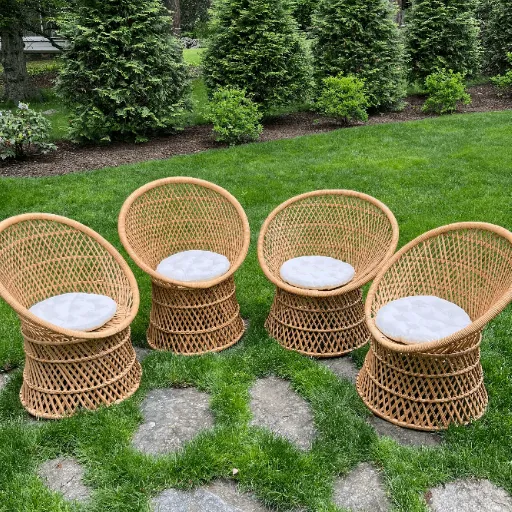
Choosing the Right Vintage Pieces for Your Space
Whenever I go searching for specific vintage wicker furniture to place into a room, I first consider the features or purposes the room is designed for. Like in a case of a lounge, I like to consider the usage of the room and the tenancy of the layout to enable the placement of strong seating or a coffee table of the right height. Determining the size of the area (measured in either diameters or squares – in conventional terms) also prevents large and easily-constructed pieces from making the room seem unwelcoming and overstretched. In my opinion, delicate pieces of furniture, especially vintage wicker accent chairs or ottomans, are the best suitable solution for limited spaces as they have utmost utility and interesting elements.
The next step in process is dwelling on the aspects of meket products like the shape, the quality and creativity involved in their production. I look at the way the textiles are intertwined, the level of polishing done and the stability of the meket furniture. Many vintage wicker furniture pieces are covered with tight hand knitted patterns which are effective not only in attracting the eye but also in increasing the strength of the mete. Equally, I consider the shade as well as the feel of the structures, making sure that they neither contrast the room’s existing colors or materials owing to their provocative nature. In my case, I find it very easy to work with neutral toned wicker more often than not, as it adapts to any setting and adds an element of ethnic elegance to the décor.
Finally, before I even think of buying any vintage items, I often remember how they are kept. When referring to wicker, it is easy to understand how it can get worn look from being used; broken parts or surfaces made pale usually happens. Such flaws however, could also enhance the outlook of the item, therefore these damages may be acceptable unless they are structural ones where repair might be necessary. Knowing about the history of a particular article often enriches my decor since it helps to create a more interesting story; as such content is also useful to have. Decoratively according to, we can also use the vintage wicker in a creative way which is the essence of timelessness in a fast growing society.
Mixing Vintage Wicker with Contemporary Styles
Someone who thinks of coordinating vintage and contemporary design goes wrong by using materials that clash. How vintage wicker furniture which is characterized by unique qualities like a close weave and a certain roughness can be complementarily used with modern furniture that takes up sharp and eye-catching frames and is more or less solid. The beauty of mixing organic-HG, with say, rattan and sleek-glossy or dull upholstery, makes for a very positive contrast that arrests the eyes, not making colors fight in front of them.
A calming or harmonious color scheme should be proposed, which will be well explained in this article in the next part. Color the interior white, as well as other neutral shades like grey or beige will help. It would even be better to check the proportion of each one; too much large wicker furniture can take over, and some thought in dressing up with wooden accessories instead is not above, for example, wicker baskets or tables.
Using vintage wicker furniture for more use also works. For example, adding old-fashioned wicker arm and glass topped table to reading area adds classic beauty and modern appeal. Yet, it is essential to ascertain the strength and stability of the old, precious wicker work and deposit coatings where legislative to avoid deterioration. Such an approach it follows, creating a differentiated space where there is creativity and love for the past.
Creating a Cozy Atmosphere with Vintage Wicker
Using vintage style can be made a good addition to any minimalist decoration; a minimal amount of placement can make any vintage wicker furniture look well if style is brought even with details of the accessories. Chairs made from woven materials retain an enduring appeal due to their durability and simplicity. They are normally employed in the form of stools or mini-tables or crisis buster chairs just inside the house. Each of these designs would be complemented with a variety of textures, eg thick materials such as cushions or vases covered with synthetic fur to increase the cozy look. This is beautifully done because there is a range of every other color including beige, ivory, and even boring gray, and the natural texture of the material makes it even more appealing.
Preservation of repairable vintage wicker furniture is more difficult in terms of today’s high ergonomic usage of such materials. Professional cleaning should be done regularly by means of an appropriate brush or a soft cloth to avoid dirt, and hard particles. A good quality clear protecting finish must also be applied regularly in order to prevent water and sun damage. If the furniture will be very active especially for dining purposes, the joints may be fitted tightly and made uncomfortable to use for a longer time or a soft pad should be put on it.
Wicker as a material that has been widely used, is being embraced once again in line with trends in sustainability in design. Its composition, which is recyclable and biodegradable, becomes appealing to other homeowners who would like to use decorations which are not harmful to the environment. When applying sufficient attention to detail and simple respects during decorating woodwork, one can find vintage wicker furniture interesting and functional in the contemporary dwelling.
References
-
The Development and Effects of the Twentieth-Century Wicker Revival – A scholarly paper from the Smithsonian Institution discussing the historical and cultural significance of wicker furniture.
- Click here to read more.
Frequently Asked Questions (FAQ)
Q: What is the average price of a vintage wicker furniture piece?
A: This varies greatly depending on how old the piece is, who made it, what condition it is in, and how rare it is. In most cases however, it is possible to find basic old-fashioned wicker designs such as chairs in not so high prices to the contrary of Victorian style sofas or S-designed particular furniture and full sets of wicker furniture. The prices range from bargains which can be procured readily to exorbitant amounts at which top condition pieces or hardly obtainable items are found in the market.
Q: Which is the most convenient place for buying authentic vintage wicker furniture and its appliance sets?
A: Vintage wicker furniture can be bought from stores such as antique stores, estate sales, the many online sites available for such purposes, and even from custom made shops dedicated to vintage or mid-century furnishings. Good places to look would often be the local flea markets and the consignment shops which might have a few peculiar items in them whereas other stores or vendors would have more explicatively described items that are of high quality as well as having being restored if necessary.
Q: How does one usually differentiate a well-constructed vintage wicker sofa or chair or one that is associated with a signature designer or a notable making?
A: Study the piece carefully for robust construction, intricately woven figures, flat seams, and other indications that the piece was made professionally. All manor if those figures are accompanied by other figures with even quite the same contour as them. It is also common to check out upholstery history mainly wicker chairs and its design chairs. The reason for that is because high end vintage wicker furniture uses special frames, very intricate weave patterns, several plies and often finishing details including signatures to help determine where the piece has been manufactured and its approximate age.
Q: How does one take care and clean vintage wicker furniture for warmth?
A: Wicker of all kinds benefits from regular dusting and mild vacuuming; heavy cleaning should not be enhanced by soaking—rather, use moist cloth with very little soap. First, ensure that all pieces used in sunlight and moist areas are reorientated so as to avoid damage in the form of bleaching or swelling and resurgence of the warm ness of the material. In case of older conservatively, ensured cold objects requiring surface and loss appearance, a treatment by experts should be preferred to avoid exposure of paint working.
Q: Is it okay to decorate my house with contemporary furniture and vintage wicker furniture?
A: Of course, yes! Especially in a modern home, layers of different furniture, even opposed designs, work wonders – you could enjoy a vintage wicker sofa or one wicker chair in a contemporary fabric and beside a thin light or any clean structure furniture introducing warmth in the furniture’s symmetry besides showcasing the structure of the center piece.
Q: What’s the protocol followed when either seat base cushions or more than one cushion in a wicker sofa or chair needs to be re-done, or replaced considering their vintage value?
A: Take the measurements of the existing cushions, her however, where increasing comfort is desired, measure each cushion’s spine, width and depth and obtain foam and fabrics contained within these parameters while introducing covers where appropriate particularly to facilitate cleaning. Nevertheless whenever possible engaging in high fidelity is also another option choosing designs that are of the period fabrics or going for durable contemporary textiles that do not sacrifice the vintage appeal of wicker furniture.
Q: Is it a possibility that one can be encouraged to mend or recreate a piece of vintage wicker furniture?
A: Reclining a chair with a broken seat back seems like a fairly simple task unless old cane is reframed and original repair weave is reproduced. However, many of the restoration processes can be done by a keen enthusiast using the right toolkit and instruction materials, replacing strippings, patching, and any weavings being some of the tasks suitable. Restoration work to reproduce complicated historic methods or to restore items with the original manufacturer’s fittings may be better left to a restorer for the outcome to be aesthetic. Before engaging in any do-it-yourself dressing consult a connoisseur, however, in cases of Victorian furniture, or even that of any notable period.
Q: How can one identify whether a vintage wicker furniture is from the Victorian period or any other timeframe for that matter?
A: This involves construction technique assessment, analyzing the materials used in making the given item, weaving habits and any inscribes/labels/stamps found and comparing those to the Victorian era and other guides. It aids in determination of the age and provenance of a piece of vintage wicker furniture buying history, seller provided document and specialist appraiser or experienced collector opinions.


