
Step-by-Step: How to Install Willow Fence Panels on Existing Walls
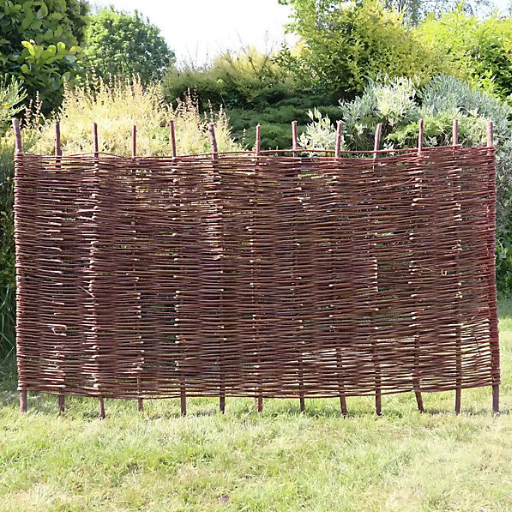
The process of affixing bamboo fencing to an existing structure is both practical and attractive in beautifying the outdoor areas. Regardless of whether you wish to have more daunting or intimidating landscape or you appreciate the beautiful look of the lawn or wish to update the unattractive appearance of the wall, the use of bamboo fencing is a conceivable and green friendly practice.—The guide will explain how to install such panels via steps that will ensure that the finished product is not only attractive but also durable. To start, let’s gather the necessary tools together and fasten the panel, covering all the procedures in the bubbke and provide quick and efficient step by step proof for this activity. This would give you the capacity to perform a comprehensive change of the old configuration of the house ensuring that you incorporate both functionality and aesthetics.
Introduction to Willow Fence Panels
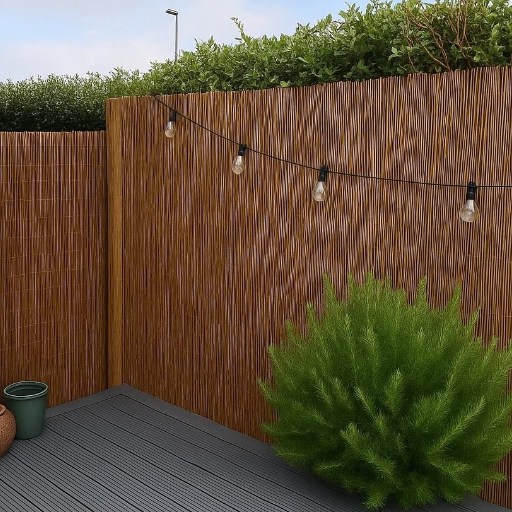
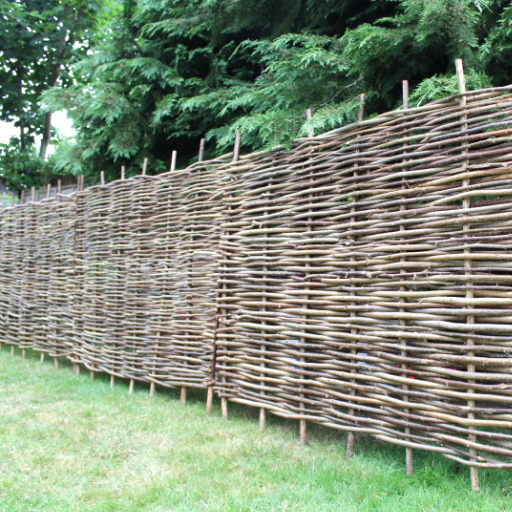
Willow fence panels are a kind of fence that will they create with weaving willow branches. These fence designs are among the most favorable today because of their properties that include strength, imperfections and other issues. They are typically used as screens for designing gardens or indoor spaces and used as a fence for gardens, decorative fencing, to name a few, in which they are great. These willow fences are eco-friendly contraptions compared to other types of fence posts, mainly because willow is a fast-growing material that grows back even after it has been chopped in a single year. Moreover, they are light to carry and will not cause you any challenges when you decide to install them, their appearance is also such that its quite organic and makes fit well in your outdoor spaces hence adding to their beauty.
Benefits of Using Willow Fence Panels
- Sustainability
These willow fence panels are crafted from a sustainable material. Within 3-4 years after cutting willow plants, they are able to regrow making willow fences a rather inexpensive in terms of energy compared to other wood or synthetic resin fences that require long preparation times.
- Versatility
These lattice panels could be used for a wide variety of purposes; partially obscuring views or wind screens, as garden separators, or as part of a decorative scheme. They can be curved or cut to fit over or around uneven surfaces, something that traditional fencing is unable to do.
- Ease of Installation
Willow panels are great because they do not weigh much, can be carried easily and installed quickly. Generally no special equipment is required and can even be tied of fixed with wires, which is time-saving and cost-effective.
- Durability and Weather Resistance
Despite drying fast, willow has strong branches. As such it can withstand light weather turbulences like rain and wind offering practical solutions for outdoor replenishing. So in order to be taken to the next level having the use expanded, they can also be chemically treated with a wood preservative.
- Aesthetic Appeal
One of the most important things to remember is that decorative willow is delicate in construction and finishing; that is why it perfectly fits the ecological aspects and correspondent aims such as garden decoration, porches decoration, walkways decoration, etc. There is also the visual effect which is offered by the pleasant texture and the color of the said lattice and screens components.
- Eco-Friendly Decomposition
If the willow fence panels are not required anymore, then it is safe to say that it will erode on its own without incurring any negative effects in the environment, this cannot be said of synthetic items or other items that are non-biodegradable.
Aesthetic Appeal and Practicality
When it comes to decorative and functional fence designs, willow fence panel happens to be one of the most desired types due to its combination of elegance and efficiency. These panels come in their natural colors, thereby making them perfect for any kind of decoration including gardens, decks and other elevated outdoor spaces. Furthermore, these fencing systems are made of a more flexible material, and can be easily trimmed to fit unusual awkward and sloping spaces.
Current findings in ecological landscaping indicate a growing preference for naturally derived materials, such as willow, consistent with prevailing attitudes toward environmental initiatives. These include such facts as the fact that once installed closed woven willow fences actually endure rather well as they are not heavy yet are long lasting, mutually enhancing ability to withstand wide range of atmospheric conditions and preserving structural soundness for years in a row. The correctness of this fittingness in design, shape, and use in terms of “convenience and beauty of each context”, urban or rural, will be regarded as attractive, satisfying sensuous and practical preoccupations.
Why Choose Willow Over Other Materials?
Willow is an exceptional material for fencing due to the fact that it represents sustainability reinforced with strength and flexibility. In contrast to synthetic or chemically-treated options, willow is a natural material which is found to be renewable and hence convenient with the aims of the current concern for the environment which majorly aims at lowering the carbon footprints. Reports revealed that the woody and fibrous characteristics of willow have great elasticity that can be put to the test under strong wind without causing any breakages since the material is thick enough.
Besides, the advantage willow has over some of its natural counterparts is the little attention it needs to keep it in good condition, as its dew and sap helps in protecting it against decaying and other pests. It can also be made into many different patterns which can be used to create different solutions for example, whether it is a residential area or commercial area within its compound functions are also considered.
Required Tools and Materials for Installation
- Willow Branches or Panels – Pre-treated or freshly cut, depending on design requirements.
- Measuring Tape – Required to ensure accuracy and avoid any margin of error.
- Shovel or Post Hole Digger – This is used for putting the support posts on the ground.
- Support Posts (if necessary) – Come in logs or steel bars that will determine the perimeter and height of the willow structure.
- Pruning Shears – For trimming and shaping willow branches as needed.
- Twine or Wire – These are for holding parts in place or tying pieces together until they fully hold in place.
- Rubber Mallet – Which prevents hard wood and hit to any other fixtures when they secure stuff.
- Gloves and Safety Gear – For every aspect of hands safety in assembling the fence.
Essential Tools for Installing Willow Fence Panels
| Tool/Item | Purpose | Additional Notes |
|---|---|---|
| Shovel or Spade | Digging holes for posts | Ensure depth aligns with fence height. |
| Support Posts | Anchor fence structure | Use wood or metal for stability. |
| Pruning Shears | Trim and shape willow branches | Keep blades sharp for efficiency. |
| Twine or Wire | Secure joints and bind sections | Prefer weather-resistant materials. |
| Rubber Mallet | Adjust pieces without causing damage | Use carefully to avoid over-striking. |
| Gloves | Protect hands during installation | Choose durable, non-slip materials. |
| Safety Glasses | Shield eyes from debris | Ensure a proper, snug fit. |
| Measuring Tape | Measure distances and alignment | Double-check measurements before cutting. |
| Spirit Level | Ensure posts and panels are level | Critical for maintaining even alignment. |
| Drill and Screws | Attach fence panels securely | Use corrosion-resistant screws. |
Materials Needed for a Successful Installation
- Willow Fence Panels – The Willow branches used in this product must be of good quality that is thicker and more closely woven together than the natural branches which serves to make the product more durable and neat. It is advisable that the panels be treated with anti-weather coating to prolong their durability.
- Support Posts – For the support posts used, it is advised that they be made from swaged steel or Pressure-treated structural timber. Posts will be ok so long as the structure can bear the line and load incurred from the willow panels, which are typically not any taller than two-thirds of the entire post.
- Post Fixing Material – If you would like to make the construction more akin to a permanent and stable one, then use concrete. If the environment is more relaxed and composed and you do not need to regulate the level of the ground, you may choose the earth spikes instead. This is especially necessary for areas which are subject to earthquakes.
- Galvanized or Stainless-Steel Fasteners – Screws, corners, ties, or anything weatherproof are associatively strongly fastened to the support posts. Moreover, the application of anti-corrosion finishes and priming in the fabrication contributes to longevity and stability of the bell-shaped spur profile over time.
- Ground Cover Fabric – To prevent weed growth underneath the willow fence, it is recommended that you also install strong ground cover fabric. It assists in less maintenance and keeps the area clean.
- Protective Coating – In light of this, it is recommended that further precautions, such as the application of wooden treatment or anti-UV seal substances, be included with the attachment of the willow panels, so as to prevent consolidation caused by sunlight, as well as rot due to humidity.
- Measuring Tools and Markers – The importance of precise measurement, especially during layout, cannot be overlooked on a project of less design work. Employ a number of tools which include measuring tapes, chalks, and, rather more, spirit levels to help guide placement and even spacing of posts and panels.
Step-by-Step Installation Guide
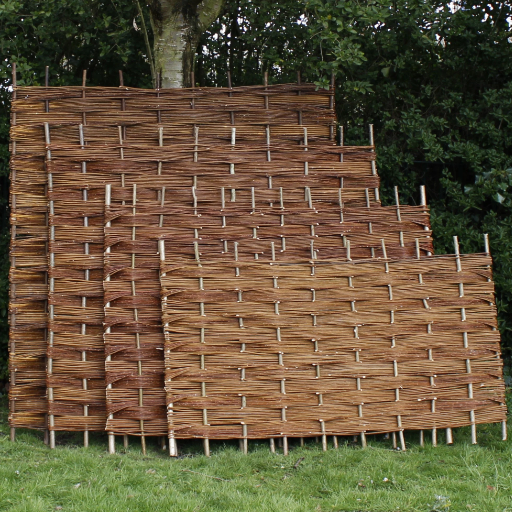
Step 1: Plan the Layout
Let’s first establish where in particular the fencing willow is to be put up. Take the measuring instruments and indicate the position for each post. The measurements must be more accurate, so that post placement problems are avoided in the future.
Step 2: Prepare the Ground
Remove any obstructions in the vicinity that could impede the construction of the fence such as rocks, roots and any other debris. Smooth the Floor in Preparation for Fence Post Establishment.
Step 3: Install Fence Posts
Decide upon a depth that you will dig post holes to. The decision should be based upon the height of the fence panels. As a rule of thumb, fence posts must be buried around 1/3 of their total height below the ground. Insert each post in a prepared hole, check the level using a level, and fill it with gravel and concrete mix to secure the post. Then, wait until the contents dry.
Step 4: Attach the Willow Panels
When the willow panels are ready, adjust the very first one to fit the posts. The panel should be fastened with the help of screws or zip ties that will not necessarily rust over time. Attach it for a minimum period only after ensuring that it is parallel to the surface. This procedure should also be applied to the other panels, with no change in edge proximity.
Step 5: Inspect and Adjust
And then the in the analysis stage of all the panels, see if there are any spaces in thesofar as the alignment of the wall is concerned, if any fastenings are not fixed appropriately at this point, and if so, correct such divergence in a way that fence strengthening and alignment of at safety different units of the fence is kept.
Step 6: Apply Protective Coating
For the sake of putting up the fence for much longer time under the willow trees, a wise decision would be to swiftly brush on a UV-protective and literally invisible wood stain/top coat or any other type of weather guard onto the top of the wood. It is especially beneficial where the fence is situated in a location that bright sunlight or downpour covers that place often.
Preparing the Existing Wall
For the wall panels installation of which was willow, proper pre-paneling procedures have a bearing on the final output. It begins by examining the walls for any physical malfunctions; take-out or fill in the excess crack sizes, ensure there are no flakes in place. In addition, check on any activity that could affect the correct fixing of willow panels. Such activity as a black or white wash may be more than sufficient to eliminate any precursor in the form of dust, pollution, tallow, fungi and other intruders. Additionally, nobody should do anything without waterproof, especially if dealing with mineral porous materials namely, concrete or brick. A lessor gravity flow imprints and a more impressive means involve the sectional liquid protectors introduced to a contaminated wf liquid wall cavity. It is the kind of readiness that ensures aesthetically pleasing as well as durable installation.
Measuring and Cutting Willow Fence Panels
To attain an exact measurement, start with assessing sizes of the panel location. Get a measuring tape to measure the arch and the length of the structure adjusting it for corners or peculiar architectural elements. Evaluate at least two points along the width and two along the height of the structure because there may be discrepancies in the levels of the substrates or in horizontal and vertical alignment.
Once the measurements have been taken as above, locate and mark the dimensions and areas to be cut on the willow fence panels using a scale, pen, pair of compasses or ruler. Use pruning shears or an appropriate saw to cut the willow tube based on the maximum length the bamboo legs can be squeezed. Clamp the two pieces of wooden grape stakes tightly on the panel to be cut if more precision is desired during the cutting operation. Please be careful not to chip the wood or damage the design of the fence when cutting.
Do not forget that it is extremely necessary to ensure safety at the time of performing the operations. Protective gloves and goggles should be used in each and every aspect to keep out sharp edges or some other difficulties. For bigger jobs, an electrical saw may be useful to speed up the cutting operation, although caution should be exercised to prevent the willow from not appearing its best. Therefore, correctly trimmed sheets of panels fitting the area of installation without any visible joints are cut in this way.
Attaching Willow Fence Panels to the Wall
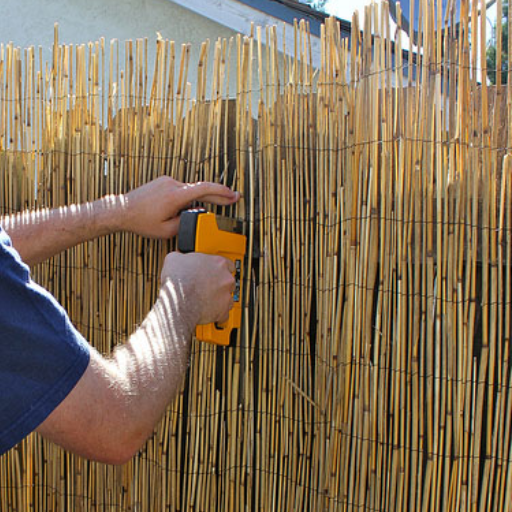
When handling or placing a willow fence panel against a wall, there are measures that need to be observed for it to be secure. Firstly, verify how the facing of the wall is so that the installation is supported. For walls composed of bricks or concrete, mounting the screws in conjunction with wall plugs is recommended to offer better support. Begin by marking the points where battens will be provided in a vertical arrangement, see to it that are equidistant from each and best support the panels’ weight. Thereafter, use a masonry bit with a drill machine in order to achieve dowel holes. Secure the battens to the walls using extensively appropriate screws.
Mounting on wooden walls is easier as screws can be inserted directly into the material without wall plugs. Follow the steps to overhang one with the battens, with stainless steel wire, outdoor-grade zip ties, or U-shaped fencing staples. Make sure to tighten up the screening and secure it at a number of positions across its top and lower edges to avoid it ‘hanging’ as well as moving in the long run. Whenever the construction is near to being finished, the appropriate sequence is for frequent checks on the alignment to sustain the harmony by the adjusted panels.
In order to prolong its lifespan, one could find it beneficial to use a protective coating on the rattan screen, which will slow down its deterioration, as well as to take steps to prevent stagnation of water in its plinth. To properly insert the support tools and take care of the work before and after, the appearance and quality of the item lasts long.
Useful Tips and Tricks for a Smooth Installation
- Prepare the Area Thoroughly:
Before you get started, clear the site of any loose materials, fog, or rough ground. A flat and tidy surface allows for easier and safer work. - Use High-Quality Materials:
See to it that the tools, fasteners, and the willow fence panels which are poor quality are replaced. Good quality materials will help to minimize the risk of problems cropping up during or after all the work has been done. - Secure Panels Tightly:
Use durable sharp screws or kerf ties to attach the panels as close as possible to the support structure. This ensures that there is no play in the fence especially with the passage of time - Check Measurements Regularly:
During the process of erection, regularly check the gaps between the posts and the alignment of the panels, if any, without waiting for the work to be completed. This completely eliminates the errors of misalignment and enables an equal, finished look. - Apply Protective Coatings:
Fill in all the holes once the willow patterns have been inlaid, with the appropriate weather-proofing sealer. This restriction protects the panels from water, sunlight and any other environmental conditions that may destroy them. - Regular Inspections Post-Installation:
Even after the willow fence has been completed, it should go through an inspection now and then. This is to keep and instead expand the occurrence of wear, tear, cracks, change of fitting and whatnot.
Best Practices for Working with Willow
- Select High-Quality Willow Materials:
It is advisable to gather ripe, dense and compliant with the same thickness willow twigs that would help in ensuring that the product formed keeps together without breakage. Well-seasoned willow, more often picked during its off-season, has some assured results when coming to longevity and work. - Pre-Soak for Flexibility:
To be able to bend the willow rods better, soak them in water for 24-48 hours before working with them. Once soaked, it becomes easier to mold the material, thus, in a way minimizes chances that the material will crack especially with thin and complex designs. - Utilize Appropriate Tools and Techniques:
When considering its utility, the first thing we should understand is that unless they are cleaned, vacuum cleaners remain dirty. This principle applies to all machines as well as tools used and in case they are dirty, just clean them to prolong their life. - Consider Environmental Factors:
Whenever any of the benches made from cured or natural cheeses spoils and rots because of water or single weak points due to failed to seal all spaces central vacuum cleaner doors forced wise be the actual furniture it has the ccleaning. Ensuring that these products are well maintained will help in enhancing the performance ate all times since they will loose their quality when they bend. - Maintenance and Longevity:
When it comes to cleansing willow furniture, the brush or a fabric cloth is employed which is damp and clean such that easily all the dirt and dust that is present within the structures made of willow has been eradicated. Coating of willows with protective materials should, as much as possible, become an annual duty to keep moisture and ultraviolet light from reaching the objects.
How to Ensure a Durable Installation
To ensure that your building will last longer, you first need to be prepared to search for durable materials that are suitable in that particular environment or geographical area. It is always a good idea to pay more attention to materials that you know have been used in an environment similar to yours that suffered fewer then expected degrading factors such as moisture, ultra violet and fluctuations in temperature. The construction of the site is just as important too whereby; care should be taken to ensure the site is well drained, terraced and no water pools are allowed since that would then create unequal distribution of weight leading to structural problems in the long run.
There are also measures like employing techniques to improve the strength of a structure. By way of illustration, attaching structures with clips also referred to as fasteners that cannot corrode or matching adhesives corresponding to properties of materials used in the installation aids it to last much longer than other buildings. On the other hand, where relevant, it will be of great help to have a foundation or a lower layer that is designed to offset any land movement or any frost-thaw effects.
After the deck has been completed, establish a maintenance plan to prevent and control the deterioration of the facility. Regular checks, especially after any extreme atmospheric conditions, will definitely prevent any possible dangers at the earliest time. Another way of ensuring the facility is safe from dangers is provision of advanced preservation treatments such as waterproofing and fungi chemical agents. Sustainable operation achieves the best results by using advanced materials, manufacturing techniques, and implementing effective maintenance of the structures on a regular basis.
Maintaining Your Willow Fence Panels
The care and cleaning of willow fence panels is paramount in the preservation efforts of their appearance and service life. In view of the fact that dirt together with vegetation and organic tracer nearly make half of the volume of the panels, one can expect such processes as rot this would cause to go on almost immediately and without an obstacle. A panel should be cleaned with a soft-bristle brush and not high-pressure water, making sure that there is no damage to the overarching. Once in a while a mix of detergent and mild water can also be used to wash the fence more effect. others most especially to the resolutely unmanageable stains or the mold that is clinging to it. Do not forget to dry the fence panels thoroughly after they have been cleaned as the unneeded humidity can make it easy to break the wires and the mold to grow. The fact that implementing this approach every year and alternatively every 6 months will certainly benefit the lifespan of the fence.
Common Mistakes to Avoid When Installing Willow Fence Panels
1. Improper Support Structure
Any weak spots that are not properly secured might cause the walls to lean over and gradually sag or even fall apart. Hence, the standing posts or any other support structures should be strongly fixed to the base at prescribed intervalston prevent tipping over.
2. Insufficient Panel Fastening
Applying weak wind-resistant ties or fasteners can result in blown-off panels or may cause all sections to snap due to twisting conditions. Alternatively, use zip ties or several turns of galvanized fencing wire to secure every design component in the structure firmly.
3. Skipping Ground Preparation
Lack of site preparation such as allowing vegetation in the intended area to overgrow, or not leveling the ground, shall be detrimental to the wall. Make sure the surface area is clear and is row before you begin installation of the wall.
4. Incorrect Sizing of Panels
Failure to cut many panes to fit a certain portion results in presence of gaps on the walls. Always double check the dimensions and measurements before cutting to ensure one pane of a particular size gets used up effectively without resulting in wastage of others.
5. Ignoring Maintenance Needs
Any fence will serve its purpose for a long time only if it does not need repairs. Use fixtures against weather conditions and if necessary, conduct a constant check for any damages to maintain the fence.
Incorrect Measurements and Cuts
During the fencing’s set-up, inaccurate alignment and unqualified fabrication may make the structure feeble and less attractive, which greatly effects the attractiveness and practical value of the fencing structure. Careful work accuracy is paramount since even small deviations may result in sections with doors, guard channels, or columns buckling. According to the data from recent construction works, a half-inch difference in measurements can weaken the load-bearing elements in construction projects of a similar nature.
To avoid the risk, essential tools such as laser distance meters or a standard tape will be needed to obtain accurate scale. Furthermore, examining the intermediate outcome before the cutting is also suggested to avoid any mistakes during the course of the fabrication of the concerned items. Applying outlined rules together with careful scheduling, accuracy, regarding installation of the fence and carrying out of other fencing works, will improve execution efficiency and protect the fence for a long period of time.
Improper Attachment Techniques
The structural function and the aesthetic appeal of a fence are jeopardized when the means of attachment are not used correctly. The use of fasteners via screws, nails or brackets inappropriately or inadequately done will cause the connection between structural components to be weak thereby leading to possible failure in the structures. For example, if one uses the screws which are too short, they will poorly stick and fail therefore their holding power will be reduced. On the other hand, if screws are overdriven, it might get to the extent that they damage the wood or other substrate.
Neglecting the specification of materials, e.g., using galvanised fasteners for outdoor projects to avoid corrosion, also leads to wear and tear. It has been reported in research that there are parts of the hardware that will wear out earlier than expected, while their setup will lead to an early failure of around 30% of otherwise durable fences. Due to proper fastener preparation, the extent in between fasteners, as well as the manufacturer’s recommendations, is important for a strong and durable se fixing.
Neglecting Wall Preparation
Not preparing the walls properly prior to their installation, however, sets up the stage for some significant functional and aesthetic turbulences later on. Allowing for it, the immediate surrounding of the construction should be extensively washed to get rid of punk and old paint so as to increase the bonding of materials. Ignoring deep-seated issues like stress cracks, flooding, and an uneven surface can affect the strength of the materials used as well as the life span of the installation.
The results of studies show that surfaces that are not treated with a primer may experience a significantly higher rate of failure of the bond between the coatings or materials with up to 40% more peeling than those on appropriately primed walls. Apart from this, stagnation of dampness on wall surfaces that are not sealed is a potential hazard as it leads to the growth of mildew or decomposition of the materials. A standardized sanding process, high-quality primer, and plugging of wall crevices will provide a solid foundation for subsequent work or plans.
Reference Sources
- The economics of planting and producing biomass from willow (Salix spp.) living snow fences
Link to source - The potential of living willow structures in the landscape
Link to source - Willow Fence Panels
Frequently Asked Questions (FAQs)
How to follow a step-by-step fencing installation guide to install willow fence panels?
The first part of the how-to guide is to measure your wall and authorize willow fence panels that fit the necessary width and height. The second part prescribes step by step installation of supports or fixing the brackets on the top and the bottom rails and using rods or stakes or screws in a firm knot. To give it a natural look, keep some space to allow wind break and think about getting willow or hazel woven panels available from garden resources. Alternatively, handle the lowest rut-free willow hurdles and their building within our training manual.
Can I install hurdle fencing or willow hurdle fencing on an existing garden fence wall?
Yes, if about a bamboo tube fence, one can attach it to an already existing wall by fixing stakes or hinges to the wall. Make sure to check that the wall is strong and does not give in to the strength of the fixings, and add a weather-resistant fence and windproof. This is an easy task that keeps the charm of a modified look incorporating natural materials and design and contains directions in completing the job properly step by step, especially when the barrier needs to be straight. If you want, nymph fence panels like those on the right can be placed inside for increased tightness and hence a more classical external design.
What tools are needed for a willow fence installation and weave technique?
Typically, when weaving willow, the main tools used are: a construction drill, chiseling bits, screws, a bubble incline level, a tape measure, and, in some cases, stakes for additional support during the weaving of panels. Vertically, attaching top and bottom horizontal support tracks to the woven fence is also good in appearance and helps the willow panels to remain in upright position. Positions that involve natural wood, the types that could be used include willow or calotherm willow, as well as those of outdoor quality, while the recommended height is explained in the manual for such wood. Many garden centres offer pre-cut willow fencing, making it easier to install.
Are hazel hurdle or willow fence panels sustainable and eco-friendly?
Hazel and willow belong to the category of soft, mother-nature-based materials, which fortunately have the capacity to grow quickly. This factor translates into the increased use of such type of panels as compared to those made using chemical and plastic which are known to be harmful yet easily accessible. Moreover, the setting of willow hurdle fencing produced locally, significantly reduces the need for transportation, as it is in line with the existing natural look and the primarily rural structure of the fence. Panels with free flow and drainage technique, if well–constructed, can stay for long and limit the level of wear and tear.


